
Faith Contradicted: Why Governor Mikie Sherrill’s Signing of S2260 Betrays Her "Catholic" Roots
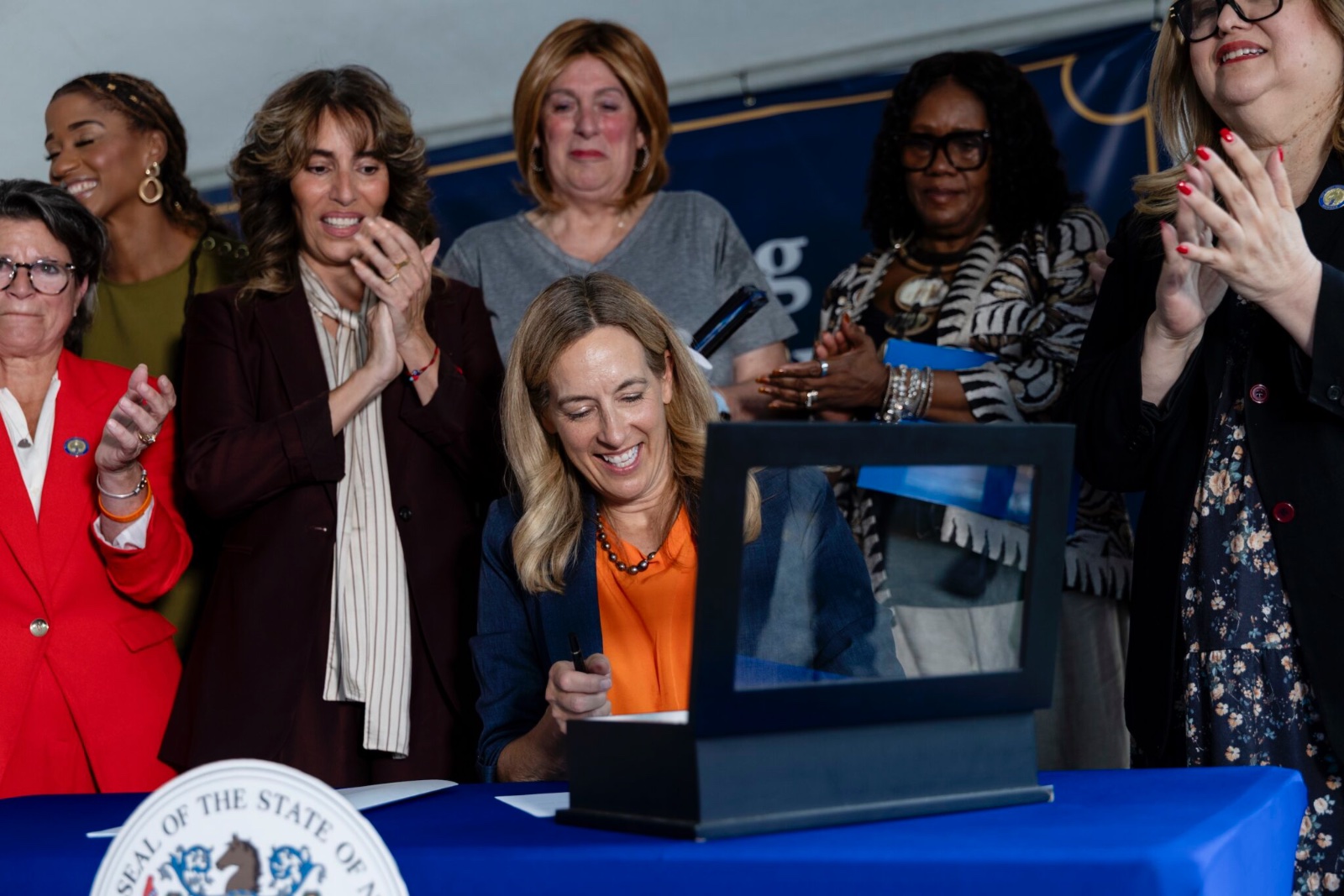
New Jersey Governor Mikie Sherrill’s deeply publicized signing of Senate Bill 2260 (S2260) represents a profound and irreconcilable departure from the Roman Catholic faith she and her family publicly claim. Both Governor Sherrill and her husband, Jason Hedberg, explicitly identify as Roman Catholic, choosing to raise their four children within the traditions of the Church. Yet, by enacting S2260, the Governor has chosen to directly alienate her own faith community in a state that ranks as one of the most heavily Catholic in the entire country—where nearly 40% of the population identifies with or was raised in the Church. The sweeping shield law enacted under S2260 directly contradicts the fundamental, non-negotiable tenets of Catholic moral teaching, making her policy choice entirely senseless given her self-proclaimed religious affiliation.
A Direct Affront to the Sanctity of Life
The foundational pillar of Roman Catholic social teaching is the absolute sanctity of human life from the moment of conception to natural death. The Catechism of the Catholic Church (CCC 2270) states unequivocally: "Human life must be respected and protected absolutely from the moment of conception." Bill S2260 attacks this core doctrine by radically rewriting state definitions of human value. The legislation explicitly clarifies that a fertilized egg, embryo, or fetus does not have independent rights within New Jersey law. To codify that an unborn child possesses no independent rights is a severe theological breach for a practicing Catholic. It reduces a living human being—possessing a distinct soul in the eyes of the Church—to mere medical property.
Dismissing the Silent Reality of Post-Abortion Trauma
By transforming New Jersey into a "sanctuary state" through sweeping civil and criminal immunity for abortion providers, S2260 does more than protect a medical procedure—it ignores the profound emotional and spiritual wounds that often follow it. While secular studies often debate the exact statistical prevalence of post-abortion trauma, both psychological research and pastoral experience confirm that a meaningful percentage of women suffer from deep, long-term regret, grief, and spiritual distress. This is particularly true for women who face moral or religious conflict, or who experience coercion from partners or financial distress. The Catholic Church recognizes this hidden suffering acutely. Through ministries like Project Rachel, the Church offers specialized pastoral care, counseling, and reconciliation for women enduring the intense psychological aftermath of abortion. By aggressively codifying a shield to expand and fast-track abortion access without addressing these deep emotional realities, Governor Sherrill’s administration treats abortion as a consequence-free clinical transaction, entirely disregarding the pastoral duty to protect women from a lifetime of silent regret.
Criminalizing the Faithful on the Sidewalk
Perhaps the most jarring aspect of S2260 for New Jersey’s Catholic community is its creation of a new fourth-degree crime: "interference with reproductive health care services.". Under this law, individuals who physically obstruct, intimidate, or interfere with access to healthcare facilities face up to 18 months in prison, with penalties scaling up to 10 years if an injury occurs. While the bill's sponsors frame this as a safety measure, pro-life advocates and Catholic organizations like New Jersey Right to Life (NJRTL) warn that its vague phrasing effectively targets peaceful sidewalk counseling and public prayer. For decades, the Catholic parish community has engaged in peaceful, prayerful witness outside abortion clinics. These volunteers do not stand on sidewalks to intimidate; they stand there to offer a final lifeline of financial, emotional, and spiritual support to desperate mothers who might otherwise make a choice they later deeply regret. By signing a bill that could criminalize citizens engaging in this peaceful, faith-driven outreach, Governor Sherrill has weaponized the state against the very corporal works of mercy her Church commands her to perform.
The Illusion of "Personally Opposed"
Governor Sherrill joins a long, troubling lineage of politicians who attempt to separate their private Catholic faith from their public legislative duties. This "personally opposed, but publicly supportive" posture has been repeatedly rejected by the Vatican. The Church teaches that a Catholic official cannot compartmentalize their conscience; they carry an obligation to defend vulnerable human life and protect women from harm in every sphere of influence. When Governor Sherrill stood outside the Montclair Planned Parenthood to enthusiastically sign S2260, she did not merely act as a neutral secular administrator. She actively pioneered an extremist legislative agenda that stands in total opposition to her Church. If faith is merely a cultural badge to be worn during election cycles, then Governor Sherrill’s actions are ordinary political theater. But if her Roman Catholic affiliation is genuine, S2260 makes absolutely no sense. You cannot look to the Cross for personal salvation while using the power of the state to deny rights to the most defenseless, while simultaneously abandoning vulnerable women to the realities of post-abortion trauma.
A Growing Pattern of Disconnect: The Case for a Recall
Ultimately, the logical and moral contradictions embedded in Governor Sherrill's signing of S2260 do not exist in a vacuum; rather, they align perfectly with a broader pattern of executive overreach and a deep detachment from New Jersey's core priorities. The signing of S2260 is simply the latest example of an executive acting outside the bounds of both her professed faith and her constituents' trust. For a state increasingly burdened by rapid administrative missteps, her contradictory actions provide a compelling, unified case for accountability via a recall. This spiritual betrayal mirrors the broader executive and fiscal turbulence that has defined the first six months of her term. Critics point out that while the Governor aggressively prioritizes progressive social agendas, basic administrative competence has fallen by the wayside—evidenced by a massive voter registration crisis and an ongoing, costly defiance of the federal judiciary. Furthermore, her state budget has faced fierce criticism for penalizing vulnerable New Jersey residents by gutting senior care programs, such as Meals on Wheels, to fund immigration agendas. For a complete breakdown of these administrative failures, budget cuts, and constitutional overreaches, read The Case for Recalling Governor Mikie Sherrill. Grounded citizens are realizing that whether she is abandoning her faith on the sidewalk or squeezing senior citizens in the state budget, Governor Sherrill’s actions point to a leadership fundamentally detached from New Jersey’s priorities.
What Do You Think?
As New Jersey navigates this pivotal moment under Governor Sherrill’s leadership, the conversation must expand beyond Trenton's political halls to the kitchens, church pews, and homes of our communities.
- To Mothers and Fathers Who Have Experienced Abortion: Reflecting on your choice, do you look back on that decision with a sense of resolution, or do you live with feelings of deep regret and grief? Looking at the framework of S2260, do you feel you could have benefited from the peaceful sidewalk counselors, faith communities, and alternative support networks that this bill now targets and pushes away?
- To New Jersey's Catholic Community: How do you feel about a Governor who identifies with your faith while actively codifying laws that oppose its most fundamental moral teachings? Do you feel represented, or do you view this as a clear betrayal of Catholic identity for political gain?
- To Parents and Citizens Across the State: Regardless of your background, what are your thoughts on an administration that fast-tracks sweeping ideological shifts while basic administrative duties, fiscal responsibility, and local senior care programs are sidelined? Does her behavior warrant a push for accountability and a recall?
Comments
 Read nextThe Case for Recalling Governor Mikie Sherrill: Administrative Failures and Constitutional OverreachContinue reading
Join the network where everyone's real
- Publish your own posts and articles to an audience of identity-verified people — standout pieces may be featured here.
- Connect and talk with real, verified humans — no bots, no anonymous accounts.
- You choose who sees each post: your verified network, or the public feed.
Free forever