
The Case for Recalling Governor Mikie Sherrill: Administrative Failures and Constitutional Overreach
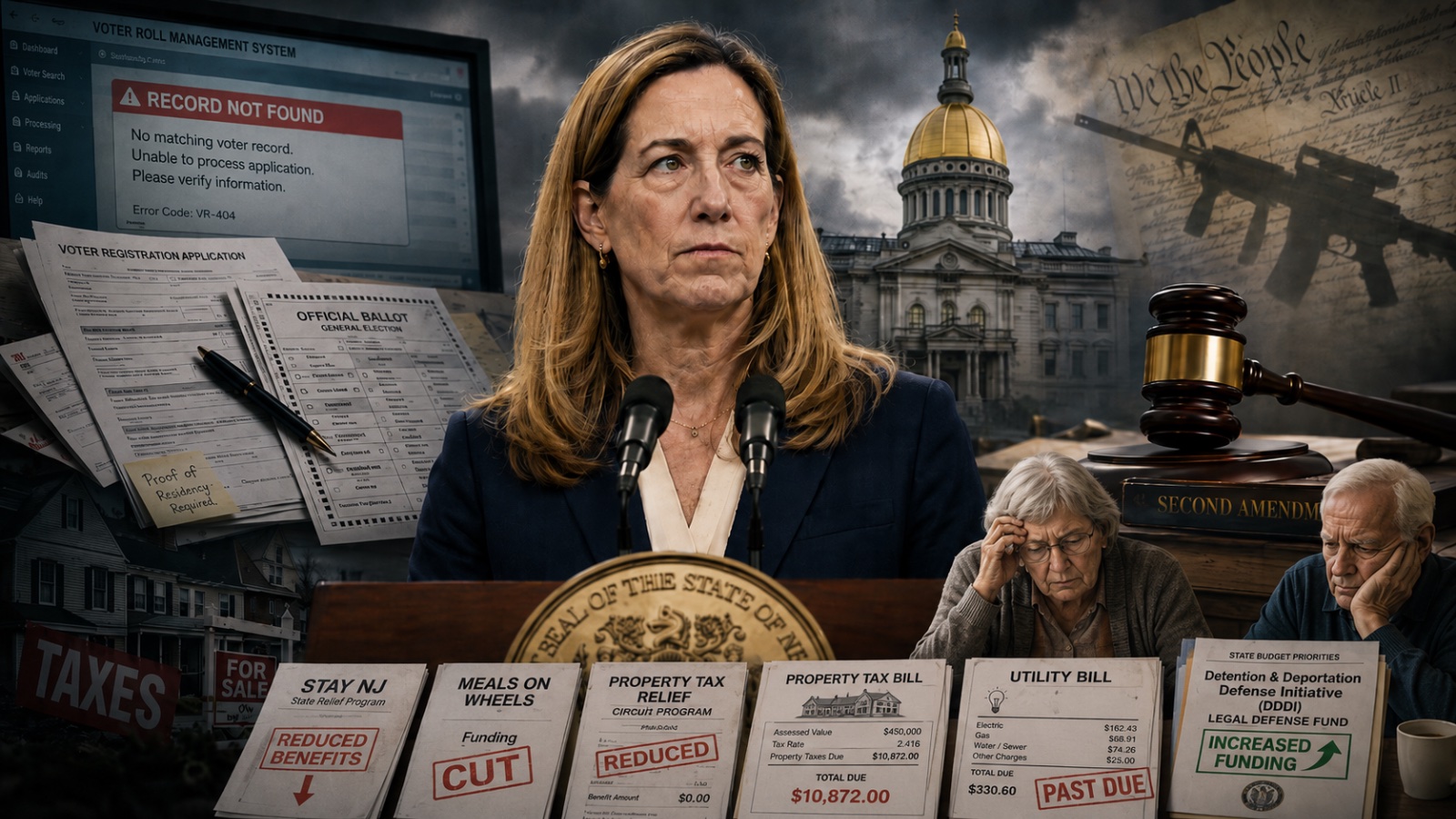
New Jersey Governor Mikie Sherrill took office in January 2026 promising a new era of transparency and economic relief. Just six months into her term, however, her administration is facing deep criticism. From a massive voter registration breakdown to an escalating constitutional showdown with federal authorities, opponents argue that Governor Sherrill’s early tenure has exposed serious flaws in leadership and administrative oversight. For a state already burdened by structural economic pressures, critics suggest that these rapid missteps form a compelling case for accountability.
1. The Voter Roll Debacle and Bureaucratic Blame-Shifting
The core crisis of the Sherrill administration stems from a massive data error within the state’s Motor Vehicle Commission (MVC). It was recently revealed that between June 2023 and June 2024, approximately 6,600 noncitizens were mistakenly registered to vote in New Jersey. Compounding the issue, an estimated 400 of these individuals cast ballots in subsequent elections. While Governor Sherrill has insisted that the error lies entirely with the external software vendor, IDEMIA, the company has forcefully pushed back. Representatives from IDEMIA maintain that their systems operated exactly as intended and had been explicitly audited and approved by state agencies. Critics argue that by shifting blame to a private contractor, the administration is avoiding its responsibility to secure New Jersey's voter rolls and protect election integrity.
2. Defiance of the Federal Judiciary on Gun Restrictions
Adding to her legal troubles, Governor Sherrill is facing severe backlash for her response to a landmark decision by the U.S. Court of Appeals for the Third Circuit. On July 17, 2026, the court ruled 10–5 that New Jersey's long-standing bans on semiautomatic rifles (such as AR-15s) and large-capacity ammunition magazines violate the Second Amendment. This marked the first time a federal appeals court has struck down an entire class of commonly owned firearms on constitutional grounds. Rather than respecting the federal judiciary's boundary, Governor Sherrill publicly vowed to defy the legal reality and keep pushing restrictions, stating: “I'm going to keep testing the courts, because this is wrong.” Critics argue that this vow to "keep testing the courts" amounts to a wasteful, ideologically driven crusade that burns taxpayer money on unconstitutional measures.
3. Misplaced Fiscal Priorities: Prioritizing Noncitizens Over Seniors
The most politically damaging element of the Sherrill administration's young tenure lies in its recently passed state budget, where opponents argue she has aggressively penalized vulnerable New Jersey residents to fund progressive immigration agendas. Critics point to explicit choices in her budget proposal to support the case that her administration is prioritizing noncitizens over homebound seniors:
- The Anti-ICE Slush Fund: Governor Sherrill successfully redirected an additional $12 million to $13 million in taxpayer funds to the state’s Detention and Deportation Defense Initiative (DDDI). This brings the fund's total budget to $20.2 million, which explicitly provides legal representation to individuals fighting federal deportation and Immigration and Customs Enforcement (ICE) actions.
- Gutting Senior Care and Relief: While expanding the deportation defense fund, Sherrill’s initial budget proposal sought to eliminate a $100,000 legislative appropriation for Meals on Wheels of Ocean County, which provides hot meals to homebound seniors. Furthermore, she aggressively lobbied to scale back the state's marquee senior property tax relief program, Stay NJ, proposing to slice the maximum senior benefit from $6,500 down to $4,000 and slash the income eligibility threshold in half. State Republican leaders Anthony M. Bucco and Declan O'Scanlon have fiercely condemned these cuts, arguing that the administration squeezed vital community nonprofits to prioritize emergency immigration defense.
A Growing Push for Accountability
A governor’s primary responsibilities include maintaining the integrity of state institutions, operating transparently under federal law, and managing the state's fiscal health with fairness to its citizens. Critics argue that the combination of the voter roll dispute, the explicit defiance of Second Amendment rulings, and the direct cutting of senior programs to fund anti-deportation efforts points to systemic problems early in her term. As public frustration increases, the case for a recall effort continues to gather momentum in Trenton.
Has Governor Sherrill’s first six months proven that she is fundamentally detached from New Jersey’s core priorities? When the state budget forces a choice, should the administration prioritize funding legal defenses against ICE over safeguarding relief programs for our own seniors? Furthermore, does her vow to "keep testing the courts" on gun control show a leader fighting for public safety, or an executive acting outside the bounds of the federal judiciary while basic administrative competence—like securing our voter rolls—falls by the wayside?
Comments
You've reached the end
That's everything — for now. Be here for what comes next.
- Publish your own posts and articles to an audience of identity-verified people — standout pieces may be featured here.
- Connect and talk with real, verified humans — no bots, no anonymous accounts.
- You choose who sees each post: your verified network, or the public feed.
Free forever