
The Case for Overturning Afroyim v. Rusk: Restoring Reciprocity and Sovereignty to American Citizenship
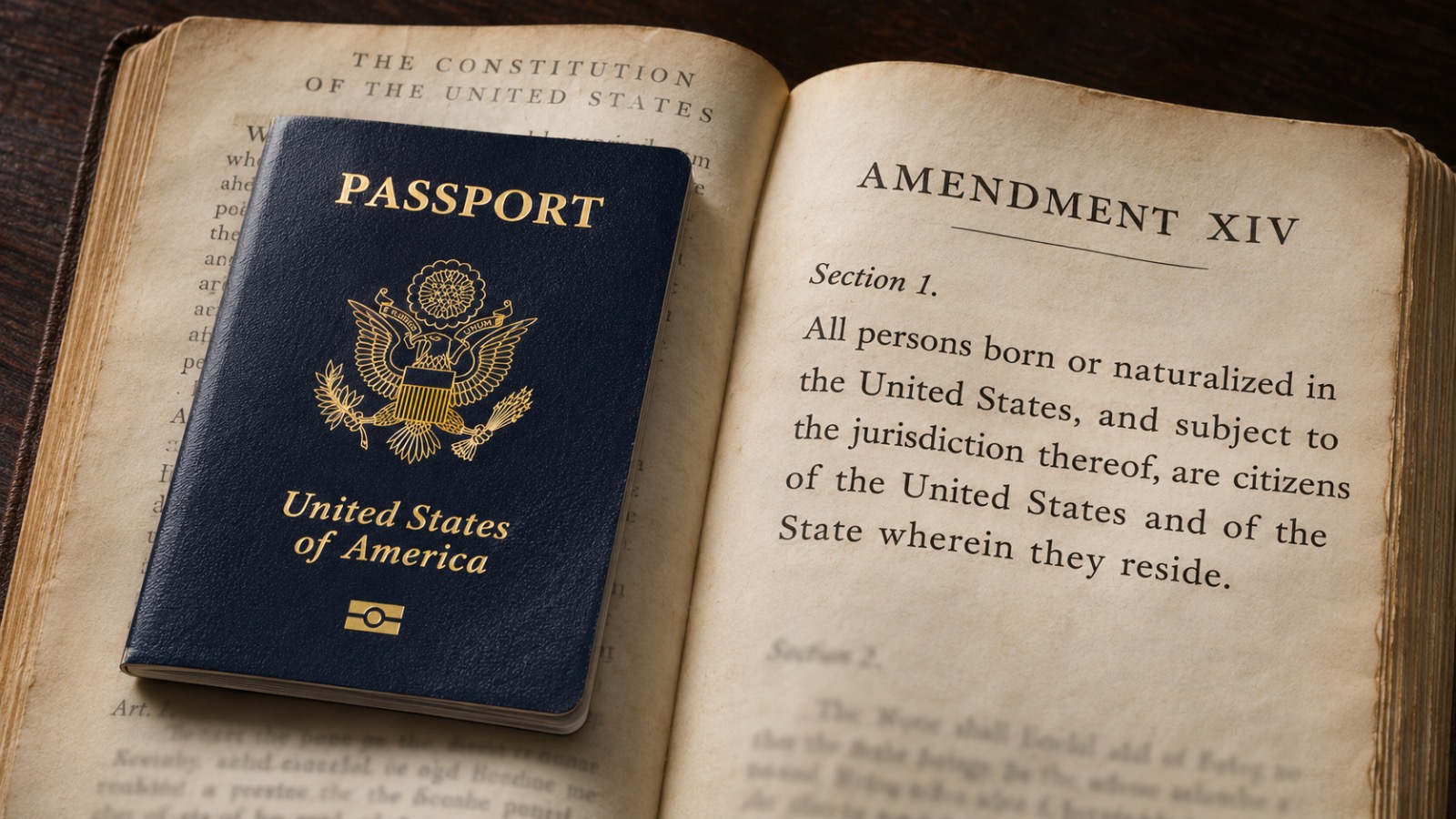
By John Joseph Kanjiram & SI In 1967, the United States Supreme Court issued a landmark 5–4 decision in Afroyim v. Rusk, fundamentally altering the nature of American citizenship. By ruling that the Fourteenth Amendment completely bars Congress from stripping a citizen of their nationality without their explicit, voluntary consent, the Court transformed citizenship from a mutual bond of allegiance into an absolute, irrevocable individual right. While Afroyim has stood for decades as the bedrock of modern dual-citizenship protections, a growing chorus of legal scholars, constitutional originalists, and national security hawks argue that the ruling was deeply flawed. Overturning Afroyim would not only correct a misreading of the Constitution, they contend, but would also restore essential tools for national sovereignty, democratic accountability, and equal responsibility.
The Origins of the Case: Who Was Beys Afroyim?
To understand why critics view the ruling as an overreach, it helps to look at the specific facts that brought the case to the Supreme Court. Beys Afroyim was a Polish-born artist who immigrated to the United States and became a naturalized American citizen in 1926. In 1950, he moved to Israel. The following year, while residing there, he voluntarily cast a ballot in an Israeli legislative election. When Afroyim attempted to renew his U.S. passport in 1960, the State Department—led by Secretary of State Dean Rusk—denied his application. The government cited Section 401(e) of the Nationality Act of 1940, which explicitly stated that an American citizen automatically lost their nationality by voting in a foreign political election. Afroyim sued, arguing Congress lacked the constitutional power to revoke his citizenship, and a divided Supreme Court agreed—striking down the law and overturning its own nine-year-old precedent in Perez v. Brownell (1958).
1. Correcting a Flawed Constitutional Interpretation
The primary legal argument against Afroyim rests on the text and history of the Fourteenth Amendment. Writing for the dissent in 1967, Justice John Marshall Harlan II meticulously demonstrated that the Framers of the Fourteenth Amendment never intended to strip Congress of its traditional power to regulate expatriation. The Citizenship Clause ("All persons born or naturalized in the United States... are citizens of the United States") was drafted to overrule Dred Scott v. Sandford and guarantee birthright citizenship to formerly enslaved people. Just one day after ratifying the Fourteenth Amendment in 1868, Congress passed the Expatriation Act of 1868, explicitly recognizing the right of expatriation and asserting congressional authority over how nationality is acquired and lost. By ignoring this historical context, the Afroyim majority invented a constitutional barrier that had never existed in American jurisprudence. Overturning Afroyim would return constitutional power to the elected branches of government, where it belongs.
2. Citizenship as a Social Contract, Not a One-Way Street
At its core, a democratic republic relies on a social contract: the nation protects the rights of its citizens, and in exchange, citizens owe allegiance to the nation. Afroyim breaks this reciprocity by allowing individuals to enjoy the full benefits and protections of an American passport while actively undermining U.S. interests or pledging loyalty to foreign sovereigns. Critics of Afroyim argue that actions speak louder than words. If an American citizen voluntarily enlists in a foreign army, holds high political office in another country, or votes to shape the foreign policy of a rival nation, they have functionally transferred their allegiance. Under Afroyim, however, as long as that individual simply claims they "intended" to remain an American, the U.S. government is powerless to sever the tie. Repealing Afroyim would allow the law to recognize that certain sovereign acts are inherently incompatible with maintaining American citizenship.
3. Strengthening National Security in a Globalized World
When Afroyim was decided in 1967, the Court could scarcely have envisioned the modern era of asymmetric warfare, transnational terrorism, and globalized dual loyalties. Today, the United States faces unique security challenges when American citizens travel abroad to join foreign militias, extremist groups, or the militaries of strategic adversaries. Currently, if a U.S. citizen fights alongside a hostile foreign force, the government faces an extraordinarily high legal hurdle to revoke their citizenship: prosecutors must prove beyond a shadow of a doubt what was inside the person's mind—specifically, that they intended to relinquish their U.S. nationality when they picked up a weapon. Overturning Afroyim would eliminate this subjective intent trap, enabling Congress to pass clear, objective bright-line rules: fighting for a foreign power or terrorist organization automatically forfeits the privilege of American citizenship.
4. Eliminating the Perks of "Citizenship of Convenience"
The Afroyim decision paved the way for the explosion of dual and multiple citizenships. While many dual citizens contribute positively to American society, critics warn that unchecked dual nationality dilutes the value of citizenship and encourages "citizenship of convenience." Without the ability to enforce exclusive loyalty, the United States has no legal recourse against individuals who use their American status strictly as an insurance policy—evading U.S. civic duties, lobbying on behalf of foreign governments, or demanding U.S. diplomatic rescues from conflict zones they voluntarily entered on a foreign passport. Restoring congressional authority over expatriation would allow lawmakers to set reasonable boundaries on dual citizenship, ensuring that those who claim the title of "American" are genuinely invested in the nation's fate.
5. How Afroyim Can Be Overturned: Two Legal Pathways
Because Afroyim is a constitutional ruling rather than an ordinary statute, Congress cannot repeal it with a simple majority vote. Instead, proponents of reform point to two distinct constitutional mechanisms to undo the precedent: • The Fast-Track Supreme Court Test Case (2 to 5 Years): The quickest route requires a coordinated effort between the legislative and executive branches. Congress would pass a targeted statute directly challenging Afroyim—such as mandating the automatic revocation of citizenship for Americans who serve as officers in hostile foreign militaries or hold high foreign political office. Once the State Department enforces the law and revokes a passport, the resulting lawsuit would inevitably lose in lower courts bound by Afroyim. However, the Department of Justice could petition the Supreme Court for expedited review, asking five justices to formally overrule the 1967 precedent and restore Congress's historical authority over expatriation. • A Constitutional Amendment (The Permanent Solution): If the Supreme Court declines to revisit its precedent, lawmakers and citizens can pursue an amendment under Article V of the Constitution. By securing a two-thirds vote in both chambers of Congress and ratification from three-fourths of state legislatures (38 states), the nation could explicitly clarify that the Fourteenth Amendment does not prevent Congress from defining acts of foreign allegiance that forfeit U.S. nationality. While politically steep and time-consuming, an amendment would permanently settle the question beyond the reach of future judicial shifts.
Conclusion
Afroyim v. Rusk was sold as an admirable desire to protect individuals from government overreach, yet it swung the pendulum too far in the opposite direction. By stripping Congress of any power to enforce the boundaries of national membership, the Court weakened the very concept of allegiance. Overturning Afroyim—whether through a decisive Supreme Court test case or a constitutional amendment—would not mean returning to the arbitrary abuses of the past, which remain barred by the Eighth Amendment and due process protections. Rather, it would restore a vital principle of self-governance: a sovereign nation must have the power to define who belongs to its political community, and what actions constitute walking away from it. ✝️🇺🇸 🫡
Comments
 Read nextDefending the Republic: How U.S. Law and Constitutional Safeguards Counter Covert SubversionContinue reading
Join the network where everyone's real
- Publish your own posts and articles to an audience of identity-verified people — standout pieces may be featured here.
- Connect and talk with real, verified humans — no bots, no anonymous accounts.
- You choose who sees each post: your verified network, or the public feed.
Free forever