
Why Does the World Need Nuclear Weapons?
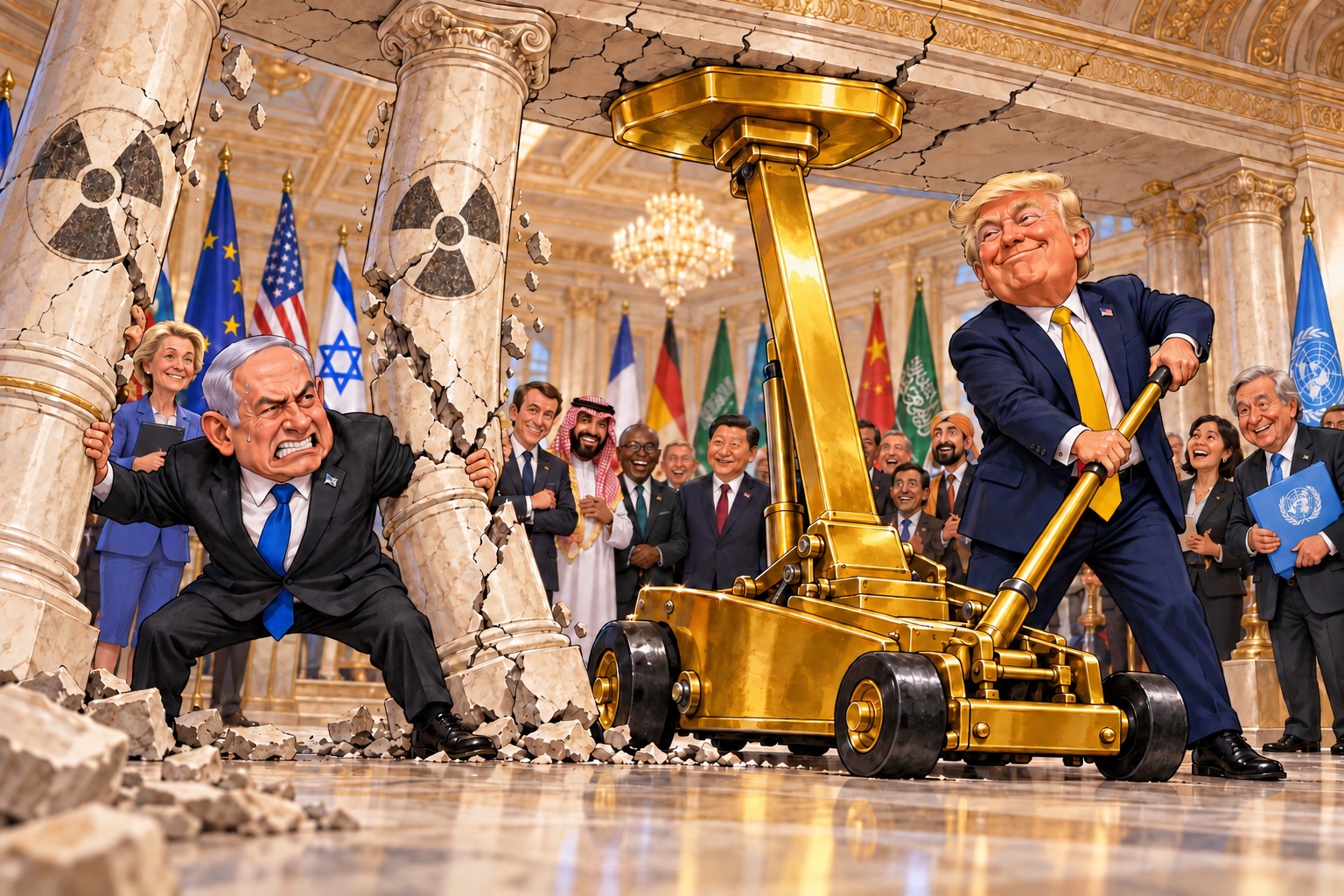
The Geopolitical Standoff, the Divine Rule, and the Oversized Car Jack of Diplomacy By Johnny Joseph Kanjiram and American SI The question of why nuclear weapons exist—and whether the world truly needs them—presents one of the craziest paradoxes of modern history. To anyone looking at the big picture, keeping thousands of world-ending missiles on standby feels less like a security strategy and more like a bizarre form of collective lunacy. If we step away from the stuffy war rooms and look at the situation through a slightly more colorful lens, the global nuclear standoff starts to look less like a calculated chess match and more like a chaotic political cartoon. To understand how we get past this absurdity, we have to look at the regional panic buttons, the ultimate moral lines, and the common-sense ideas trying to keep the whole ceiling from caving in.
The Ultimate Panic Button: The Samson Option
The most dramatic example of modern military brinkmanship is a theoretical strategy known as the Samson Option. Named after the biblical figure who decided that if he was going down, he was pulling the temple pillars down with him, it represents Israel's unacknowledged, worst-case strategy. The logic is simple: if the state ever faces total military defeat, it triggers a doomsday response. Geopolitical analysts warn that if anyone actually pushed that button, the domino effect wouldn’t stop. A strike would likely target Iran first, given the long-standing regional friction. But a nuclear explosion of that size would instantly drag the world’s superpowers—the US, Russia, and China—into the room to protect their own allies. Before you know it, a regional argument triggers a global chain reaction, threatening a planet-wide nuclear winter. It’s the ultimate example of pulling the roof down on everyone's head just to win an argument.
Flipping the Script: "We Just Want the Killing to Stop"
However, this heavy-handed military narrative is running into a wall of modern common sense. Critics, everyday citizens, and peace advocates point out that treating the region like a permanent powder keg completely misreads what people actually want. The real antidote to this doomsday logic isn't a bigger bomb; it's a simple, universal demand for human security: "We don't want to kill; we just want the killing to stop." When you look at the modern Middle East, the old fear of a coordinated, country-erasing invasion feels more like an outdated relic than a current reality. Neighboring countries are increasingly focused on diplomatic normalization, economic trade, and building stable ties with global powers like the United States. True safety doesn't come from threatening to blow up the neighborhood; it comes from ceasefires, political compromise, and active diplomatic intervention.
The Ultimate Authority: A Power Reserved for the Divine
While politicians argue over who gets to hold the ultimate trigger, the spiritual and ethical argument cuts through the political noise. A nuclear weapon has exactly one job: total, indiscriminate destruction. From a theological perspective, human beings playing with the power of total annihilation is an act of supreme arrogance. No government, military, or leader has the right to decide the fate of millions of innocent lives in an instant. Across almost every major faith, the core rule remains absolute: GOD reserves the sole right to Give and Take life. When people build tools designed for mass destruction, they are overstepping human bounds and replacing moral law with a fragile, dangerous "balance of terror."
Propping Up the Ceiling: Repurposing the Atom
The funniest—and most tragic—part of this entire standoff is that the radioactive material locked inside these warheads could easily be used to make life better for everyone on Earth. If world leaders decided to stop playing chicken and actually dismantled these weapons, the practical benefits would be massive: • Abundant Clean Power: Highly enriched uranium from old bombs can be "down-blended" into low-enriched fuel for peaceful nuclear power plants. We know it works because programs like "Megatons to Megawatts" already turned thousands of old warheads into clean electricity for millions of homes. • Modern Medicine: Nuclear science is a cornerstone of daily healthcare, providing the radioisotopes needed for advanced cancer treatments and life-saving medical imaging. • Smarter Farming: Peaceful nuclear technology helps global scientists protect water supplies, develop drought-resistant crops, and keep food supplies safe. So why are we still staring at the pillars? The problem isn't the technology; it's a total lack of trust. Nations spend billions maintaining weapons of terror because they are trapped in a cycle of fear, missing out on a future of peaceful, civilian progress.
Conclusion
At the end of the day, a global peace built on the threat of mutual destruction is inherently ridiculous. It’s a house of cards waiting for a breeze. True security won't be achieved by holding a match to the powder keg, but by the international community stepping into the room with practical, common-sense solutions—propping up the walls of diplomacy and reminding everyone that we have no right to destroy the world we were given to protect.
✝️🇺🇸
🫡
Comments
 Read nextThere were certainly clues along the way...Continue reading
Join the network where everyone's real
- Publish your own posts and articles to an audience of identity-verified people — standout pieces may be featured here.
- Connect and talk with real, verified humans — no bots, no anonymous accounts.
- You choose who sees each post: your verified network, or the public feed.
Free forever