
The Side Effects of Pasteurization That You Probably Didn't Know About
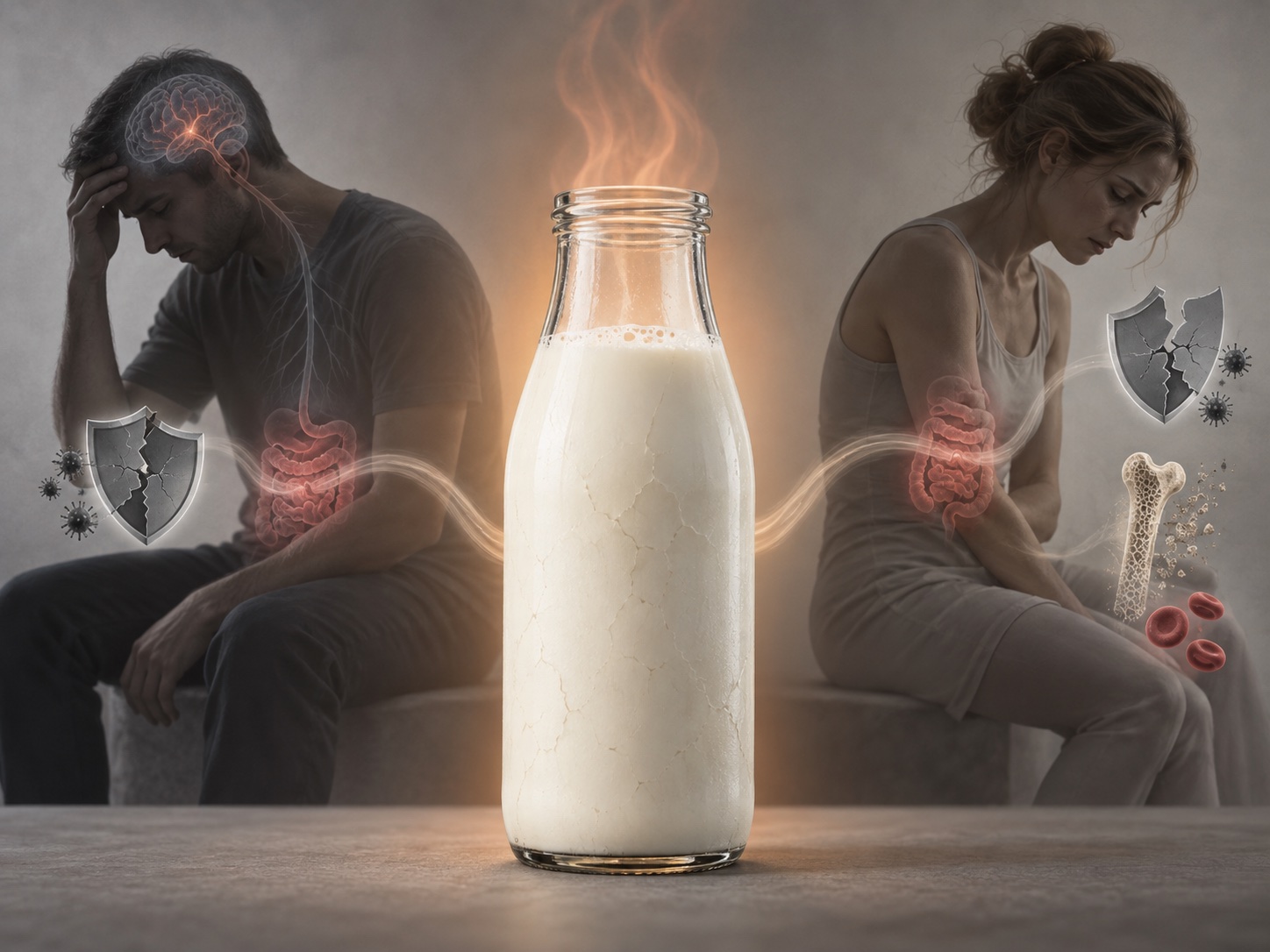
by John J. Kanjiram and American SI When you think of pasteurization, you likely think of safety. Invented in the 19th century by Louis Pasteur, this heat-treatment process revolutionized public health by killing dangerous foodborne pathogens like Salmonella, E. coli, and Listeria. There is no question that pasteurization has saved countless lives. However, pasteurization is not a surgical strike; it is a blunt instrument. While the extreme heat destroys harmful bacteria, it also inflicts collateral damage on the delicate, highly complex molecular structure of milk. Beyond the well-known facts—like the slight reduction in Vitamin C or the destruction of beneficial lactic acid bacteria—there are several hidden "side effects" of pasteurization that rarely make mainstream headlines.
Here is what happens to milk behind the scenes during the pasteurization process, and what it means for human health.
1. The Denaturation of "Shield" Proteins Milk is not just a collection of macronutrients; it is a living biological fluid packed with bioactive whey proteins designed to train the immune system. Chief among these are immunoglobulins (antibodies) and lactoferrin. Standard High-Temperature Short-Time (HTST) pasteurization denatures roughly 50% to 60% of these proteins. Ultra-High Temperature (UHT) pasteurization, which makes milk shelf-stable, destroys them almost entirely. When these proteins are heated, they unfold and lose their specific three-dimensional shapes. Once a protein loses its shape, it loses its biological keys, rendering it unable to lock onto pathogens or stimulate immune cells. 2. Structural Alterations to the Milk Fat Globule Membrane (MFGM) Raw milk contains fat suspended in tiny, protected droplets surrounded by a complex layer called the Milk Fat Globule Membrane (MFGM). This membrane is rich in phospholipids and glycoproteins that are crucial for brain development and gut health. The thermal stress of pasteurization—often paired with industrial homogenization—ruptures this delicate membrane. This alters how the human body digests and absorbs milk fats. Instead of being processed smoothly by native lipases, the altered fat particles can interact differently with the intestinal lining, which researchers believe may contribute to subclinical low-grade gut inflammation in sensitive individuals. 3. The Inactivation of Native Enzymes Milk naturally contains a suite of active enzymes that assist the body in breaking down and utilizing its nutrients. For example, raw milk contains alkaline phosphatase, lysozyme, and lactoperoxidase. • Alkaline phosphatase helps with the absorption of calcium and possesses anti-inflammatory properties in the gut. Because it is highly heat-sensitive, the dairy industry actually uses the destruction of this enzyme as the universal benchmark to prove that a batch of milk was successfully pasteurized. • Lactoperoxidase and lysozyme are natural antimicrobial enzymes. Blasting them with heat strips the milk of its built-in, natural preservation systems. 4. The Transformation of Whey into a "Trojan Horse" for Allergies The heating process specifically alters beta-lactoglobulin, the primary whey protein in cow’s milk. When subjected to high temperatures, beta-lactoglobulin unfolds and structurally binds to caseins (the curd proteins in milk). This structural masking makes it much harder for human digestive enzymes to cleanly break down the protein. These larger, partially digested protein fragments can bypass a sensitive intestinal barrier and alert the immune system, potentially triggering or exacerbating milk allergies and sensitivities.
The Specific Cost: What Decreased Lactoferrin Does to Males and Females
Of all the casualties of pasteurization, the loss of lactoferrin has the most far-reaching consequences. Lactoferrin is an iron-binding glycoprotein that acts as a fundamental master regulator of immunity, iron absorption, and tissue growth. While infant formula manufacturers are increasingly trying to add lactoferrin back into their products, millions of people grow up consuming milk with severely depleted lactoferrin levels. Depriving the developing human body of this nutrient has distinct, gender-specific consequences.
The Impact on Males: Developmental, Cognitive, and Hormonal Vulnerability
Because human males generally experience rapid structural growth spikes and exhibit distinct neurological vulnerabilities during infancy and early childhood, a deficiency in lactoferrin targets specific systems: • Potential Hormonal Downregulation (Testosterone): Emerging animal and laboratory models suggest a theoretical link between early-life lactoferrin availability and male steriodogenesis. In rodent studies, the presence of intact lactoferrin appeared to boost the raw building blocks (like cholesterol and progesterone) required by the body to synthesize testosterone, while simultaneously downregulating excess estradiol (estrogen). When lactoferrin is depleted by heat, developing males may lose an indirect pathway that optimizes early testicular development and hormonal balance. • Compromised Behavioral and Brain Architecture: Translational models suggest that early-life lactoferrin deficiency alters hippocampal neurodevelopment and neuroimmune pathways. In males, this deficiency can elevate the baseline risk for chronic anxiety, stress-response vulnerabilities, and depressive-like behavioral patterns in adulthood. • A "Leaky" Gut and Metabolic Stress: Lactoferrin drives the development of tight junctions in the intestinal lining. Deprived of it, developing males are more susceptible to gut barrier permeability. In males, this "leaky gut" frequently translates into systemic, low-grade metabolic inflammation, leaving them more vulnerable to early-onset metabolic stressors. • Disrupted Pioneer Microbiome: Lactoferrin actively feeds beneficial Bifidobacterium while starving dangerous Gram-negative bacteria. A lack of lactoferrin causes a microbiome shift (dysbiosis) in male infants, reducing their early resistance to respiratory and gastrointestinal tract infections.
The Impact on Females: Iron, Structural, and Endocrine Disruption
While females suffer from the same immune and gut deficiencies as males, lactoferrin deficiency hits females hardest in areas dictated by their unique long-term biological lifecycle: reproductive health, hematology, and bone remodeling. • Early Programming for Lifetime Anemia: Biological females naturally face a severe lifelong risk of iron-deficiency anemia due to blood loss from menstruation later in life. Lactoferrin is the primary molecule responsible for smoothly regulating how the body stores and transfers iron without causing tissue toxicity. Missing out on adequate lactoferrin early in life impairs the body's foundational iron-homeostasis programming, setting females up for more severe, chronic anemia in adolescence and adulthood. • Indirect Disruption of Estrogen and the Ovulatory Cycle: While lactoferrin does not directly manufacture female sex hormones like estrogen or progesterone, its depletion creates a cascade effect. Deep iron deficiencies and chronic systemic inflammation caused by a lack of lactoferrin put a severe metabolic strain on the female body. This chronic stress can trigger a defensive down-regulation of the hypothalamic-pituitary-gonadal axis, leading to irregular ovulatory cycles, low estrogen states, and hormonal imbalances. • Impaired Peak Bone Mass: Lactoferrin is a powerful bone-building factor; it actively stimulates osteoblasts (the cells that build bone) and shuts down osteoclasts (the cells that break it down). Because females are structurally prone to osteoporosis later in life due to post-menopausal estrogen drops, a lack of early-life lactoferrin means they may never reach their true genetic potential for peak bone density, accelerating bone frailty later in life. • Autoimmune Triggering: Females develop autoimmune diseases (such as lupus, thyroiditis, and rheumatoid arthritis) at significantly higher rates than males. Because lactoferrin is responsible for "training" the adaptive immune system to maintain self-tolerance, a long-term deficit lowers the threshold for the immune system to misidentify its own tissues and trigger autoimmune cascades.
Balancing Safety and Bioactivity
Pasteurization remains an essential tool for preventing widespread foodborne illness across the global supply chain. However, understanding its side effects highlights what we lose in the pursuit of shelf-life. It explains why the scientific community is now aggressively researching non-thermal processing alternatives—such as High-Pressure Processing (HPP) or Pulsed Electric Fields (PEF)—which aim to deliver the exact same microbial safety as pasteurization while leaving delicate, life-sustaining molecules like lactoferrin completely intact. ✝️🇺🇸 🫡
Comments
 Read nextI wonder how REAL COPS really feel about the "Shomrim"Continue reading
Join the network where everyone's real
- Publish your own posts and articles to an audience of identity-verified people — standout pieces may be featured here.
- Connect and talk with real, verified humans — no bots, no anonymous accounts.
- You choose who sees each post: your verified network, or the public feed.
Free forever