
The Swing of the Pendulum: Tracking the Centuries-Old Evolution of U.S.-Russian Relations
By Johnny Joseph Kanjiram and American SI The current, complex state of geopolitics makes it easy to forget that the United States and Russia were once described as "the closest of distant friends." Both nations grew up as historically Christian-majority societies, though this shared cultural bedrock was forged in entirely different fires. Long before the Cold War, the two nations shared a century of deep strategic cooperation. Understanding how that bond fractured—and how modern pragmatic deals are reshaping it today—requires looking back to a time when Washington and St. Petersburg stood side by side.
The Era of Goodwill: Unlikely Allies (1776–1867)
For the first century of American independence, the United States and the Russian Empire enjoyed remarkably warm relations. Though separated by vast geography and starkly different political systems—one a young Constitutional Republic, the other an absolute Autocracy—they were united by a shared rival: the British Empire. This geopolitical alignment manifested in critical moments of support: • The American Revolution: Empress Catherine the Great indirectly aided the American colonies by repeatedly denying British requests to borrow Russian troops to fight the revolutionaries. • The American Civil War: In 1863, when Britain and France weighed intervening on behalf of the Confederacy, Tsar Alexander II dispatched Russian naval fleets to New York and San Francisco harbors. This silent show of force served as a powerful deterrent against European intervention. • The Alaska Purchase: This era of goodwill culminated in 1867 when Russia sold Alaska to the United States for $7.2 million—a transaction driven by Russia’s desire to keep the territory out of British hands while fueling American expansion.
The Ideological Fracture: The Bolshevik Revolution (1917)
The turning point that permanently altered the trajectory of global politics occurred in 1917. The Bolshevik Revolution, led by Vladimir Lenin, dismantled the Russian monarchy and established the world’s first communist state. Almost overnight, the pragmatic alliance evaporated, replaced by deep-seated mutual suspicion: • The Red Scare & Non-Recognition: The Bolsheviks’ radical ideology—coupled with their decision to nationalize American property and exit World War I—deeply alarmed Washington. President Woodrow Wilson refused to legally recognize the new Soviet government. • Military Intervention: In 1918, the U.S. deployed thousands of troops to Siberia. Though officially tasked with securing war supplies, the intervention was viewed by the new Soviet regime as an attempt by Western capitalists to strangle their revolution in its cradle. While the two nations would later form a reluctant, fragile "marriage of convenience" to “defeat” Germany in World War II, the ideological trust was broken. The fall of Berlin in 1945 did not bring peace; instead, it immediately gave way to the decades-long proxy conflicts and nuclear brinkmanship of the Cold War.
Looking Ahead: Is a Return to Friendship Possible?
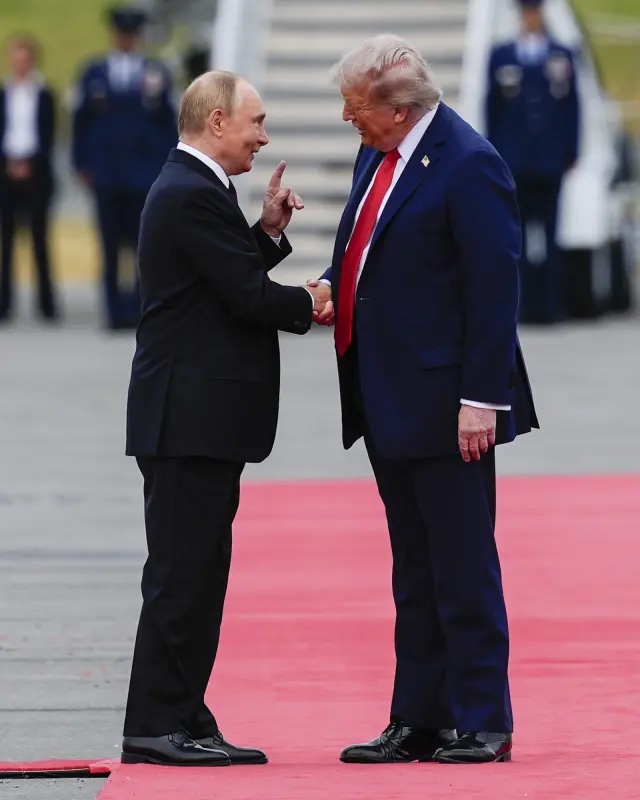
Today, relations between Washington and Moscow are entering a highly fluid, intensely transactional era. While long strained by modern territorial conflicts, severe economic sanctions, and divergent visions for the global order, history proves that the relationship between these two powers is a pendulum that has swung from deep alliance to bitter rivalry before. Hope for a stable future lies not in expecting either nation to abandon its core interests, but in rediscovering the pragmatic realism that defined their early history. This dynamic has manifested in recent, high-stakes diplomatic and economic breakthroughs driven by direct communication between President Donald Trump and President Vladimir Putin: • Unilateral Diplomatic Goodwill: In October 2026, following direct phone negotiations between Trump and Putin, Russia ordered the release of Stephen Hubbard, a 74-year-old American citizen and former teacher who had been jailed since 2022 on mercenary charges. Delivered directly to U.S. special envoy Steve Witkoff in St. Petersburg, the high-profile release required no prisoner swap from the United States—standing as an unprecedented gesture of diplomatic leverage and signaling a profound shift toward direct executive engagement. • Transactional Resource Agreements: In a major policy pivot, the Trump administration negotiated a deal to import hundreds of thousands of tons of Russian diesel fuel to U.S. and global markets to curb high domestic energy prices. To facilitate the agreement, the Treasury Department issued a temporary license suspending key economic sanctions on Russian diesel. While facing sharp bipartisan criticism from lawmakers who argued it funds Moscow's war machine, the administration defended the move as a necessary pragmatic step and an incentive to bring Russia to the peace table. • Shared Global Threats: Beyond immediate transactional deals, long-term re-engagement will likely depend on addressing overlapping transnational challenges that ignore borders, such as global terrorism, nuclear proliferation, and global health security. • Cultural and Scientific Exchange: Reigniting the grassroots academic, artistic, and space exploration partnerships (like the International Space Station) that kept communication lines open even during the tensest decades of the 20th century. The story of U.S.-Russian relations is a reminder that enmity is not a historical permanence. If the two nations can navigate vast ideological divides and modern geopolitical tensions to find transactional common ground, the door remains open for future generations to steer the pendulum back toward stability and mutual respect. ✝️🇺🇸 🫡
Comments
Join the network where everyone's real
- Publish your own posts and articles to an audience of identity-verified people — standout pieces may be featured here.
- Connect and talk with real, verified humans — no bots, no anonymous accounts.
- You choose who sees each post: your verified network, or the public feed.
Free forever